Weakness in EPC Tender Documents and the Beginning of Claims
In a mining project, right after the work started, the contractor refused to provide facilities for the employer and the consultant. His reasoning was simple: in the EPC tender documents, it was only stated that the contractor must provide the required facilities, but the exact quantity and scope were not specified. This lack of clarity immediately led to the first claim between the parties—an issue that could have easily been avoided with more precise tender documentation.
How Ambiguities in EPC Tender Documents Lead to Contractual Disputes
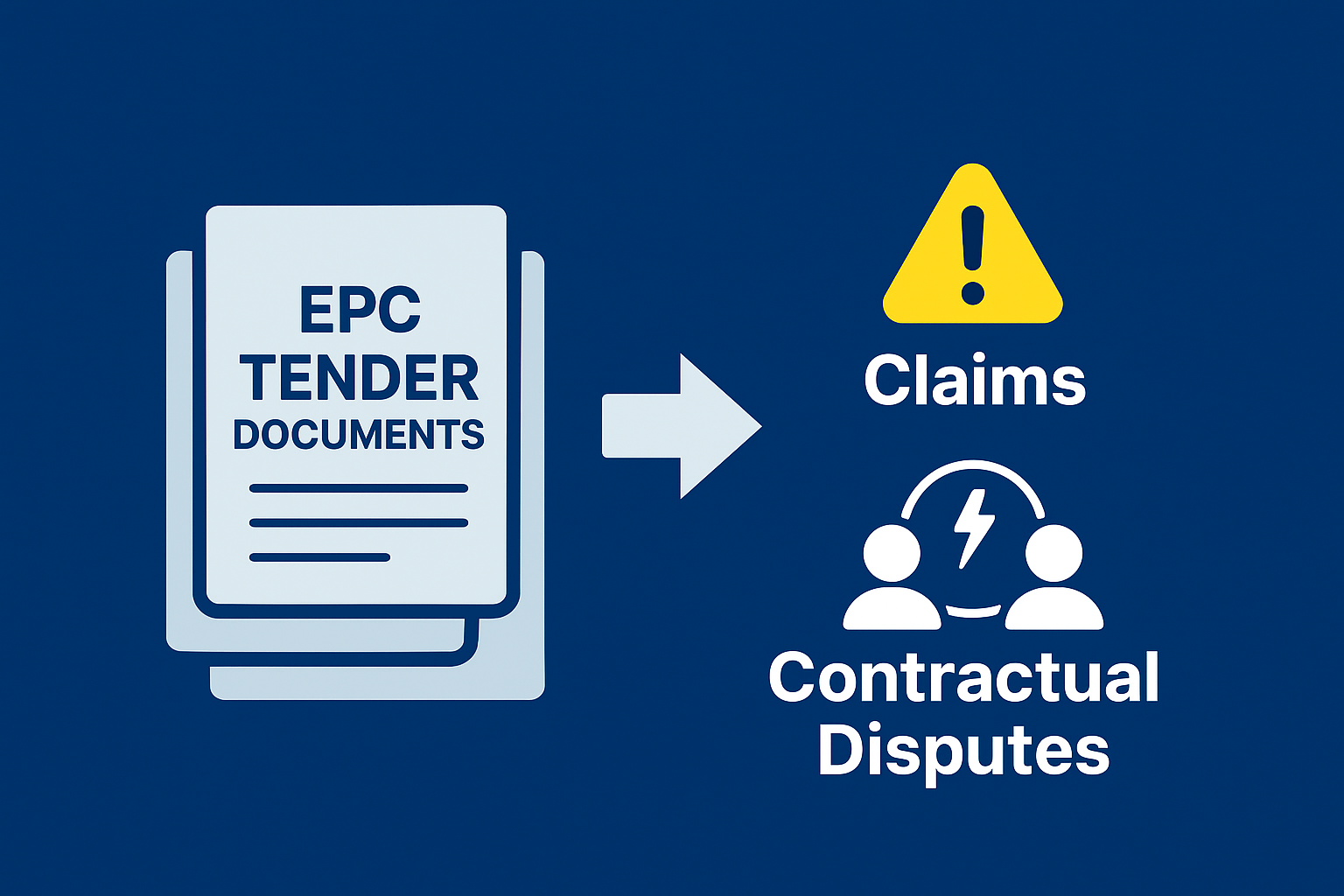
In large-scale EPC projects, poor drafting of EPC tender documents plants the seeds of future disputes from the very beginning. If the employer prepares incomplete or ambiguous documents, each contractor will interpret the scope of work differently and submit proposals based on incorrect assumptions. Such a start usually ends in disagreements and contractual disputes.
Research shows that deficiencies in tender documents are a major cause of claims and disputes in project execution. Incomplete or unclear documents blur the commitments of the parties and open the door for extra cost demands and project delays.
Root Cause: Contract as the Common Language
The EPC tender documents form the foundation of the contract. Any weakness in this foundation will later appear as cracks in project execution. For example, if the technical specifications or project requirements in the RFP are not clearly stated, the contractor may demand tasks beyond the contract or, conversely, avoid fulfilling some obligations.
These shortcomings often turn into financial and time-related claims, forcing the employer and contractor toward lengthy dispute resolution processes. Experience proves that projects launched without mature and comprehensive tender documents often face costly surprises and crises during execution.
CMBOK Best Practice: Professional Contract Management to Reduce Claims
According to the Contract Management Body of Knowledge (CMBOK) and international best practices, preparing professional EPC tender documents before contract signing is essential.
This requires experienced specialists to draft general and special conditions of contract, technical specifications, scope of work, and evaluation criteria. With the help of international standards such as FIDIC, employers can ensure that all requirements and responsibilities are clearly defined. This approach reduces the risk of contractual disputes and makes future dispute resolution more straightforward.
Conclusion and Call to Action
Every hour spent preparing precise EPC tender documents before contract award will save multiples of that time by preventing claims, disputes, and rework during project execution.
If you want your EPC project to proceed with minimum conflict and without costly contractual disputes, start with strong foundations. At IPM-Assist, our team of experts is ready to help you draft comprehensive tender documents or provide specialized consulting. Contact us today and keep your project on the right track from the very first step.